MY FAVORITE PAGES

Monday, January 28, 2013

Shell feels chill of Arctic problems

Shell feels chill of Arctic problems

Jan 27th, 2013 
by John Donovan.

…the City is concerned about Shell's prospects in the Arctic after the company's Kulluk drilling rig ran aground off the coast of Alaska on New Year's Eve. The grounding was the latest in a series of mishaps in Shell's quest to extract oil from the polar region, which has cost the company £3.2bn but has yet to result in the discovery of any commercial quantities of oil.

Oil giant's profit to soar as price rises and China booms

Tom Bawden: Sunday 27 January 2013

Shell will announce a bumper set of 2012 results this week, though the sheen of a profit leap will be removed as it updates the market on its problems in the Arctic.

The FTSE 100 oil giant is set to report on Thursday that net income soared by 42 per cent to $7bn (£4.4bn) last year on the back of increased oil production from Canada's tar sands and rising output from its liquefied natural gas operations in Qatar.

Shell also benefited from a strong oil price and increased profit margins at its refining business, amid declining competition after refineries, such as Coryton in Essex, closed. China's buoyant car market will have also fuelled the results.

The full-year figures will come as a welcome relief for investors, after Shell unveiled disappointing results for the third quarter. Profit slumped by 15 per cent after a $354m (£224m) writedown on its US shale gas business, where the fracking boom has significantly increased supply and therefore forced down prices.

However, the City is concerned about Shell's prospects in the Arctic after the company's Kulluk drilling rig ran aground off the coast of Alaska on New Year's Eve. The grounding was the latest in a series of mishaps in Shell's quest to extract oil from the polar region, which has cost the company £3.2bn but has yet to result in the discovery of any commercial quantities of oil.

The incident has raised concerns that the Kulluk might not be repaired in time for the Arctic's drilling season from July to October, further pushing back Shell's timetable for producing oil in the region. The US government has also ordered two reviews into Shell's activities off the Alaskan coast that could push back its exploration programme further.

"These issues will have slowed the trajectory and the market will be looking for clarification on the start-up and timing of the Arctic," said Investec analyst Stuart Joyner.

A Shell spokesman added: "At this stage, it's too early to gauge any impact on our ongoing exploration plans, but with the Kulluk now safely recovered, we'll carry out a detailed assessment of the vessel to understand what those impacts might be."

Another company that has also had some high-profile problems recently – the South African platinum miner Lonmin – will also update the market on its performance at its annual general meeting on Thursday.

Lonmin, which was at the centre of a series of strikes that swept South Africa's mining industry last year, is set to reveal that it produced 115,000 ounces of platinum in the first quarter of its financial year, ending 31 December. This is the same level as the year earlier, but well down on the 196,000 ounces Lonmin produced in the previous quarter.

However, Lonmin's first quarter is typically the production low-point of the year because that is the summer period in which miners take most of their holidays.

SOURCE

Posted in: AlaskaArcticOilRoyal Dutch Shell PlcThe IndependentUnited States.
Tagged:  ·  ·  ·  ·  · 

Sunday, January 27, 2013

30 January 2013: Court Verdict Expected on Shell’s Nigerian Oil Pollution

30 January 2013: Court Verdict Expected on Shell's Nigerian Oil Pollution

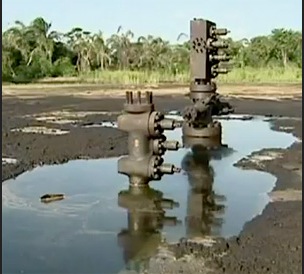
At 10 am on 30 January, the court in The Hague will rule on the case of Milieudefensie and four Nigerian farmers versus Shell. The public sitting in this case took place on 11 October last year. The court case is unique because it is the first time that a Dutch multinational has been brought before the court in its home country for environmental damage caused abroad. The case focuses on just three of the thousands of oil leaks in Nigeria. In the case, Milieudefensie demands that Shell cleans up the oil pollution in the villages, compensates the farmers for the damages suffered and maintains the oil pipelines better in the future.

Interview requests
In connection with the anticipated media interest following the 30 January verdict, we ask that media requests for interviews with one of the spokespeople listed below be made in advance to Milieudefensie's press office.
Spokespeople
Eric Dooh, one of the Nigerian plaintiffs, is in The Hague and will be available to the media on behalf of the plaintiffs. Geert Ritsema and Evert Hassink, of Milieudefensie's International team, will be available to the media on behalf of Milieudefensie. Milieudefensie's lawyer, Channa Samkalden of Böhler Advocaten, will be available for questions on the legal aspects of the case.
Web and Social Media
Please tweet using  #Shellincourt. The court will give its verdict in Dutch. Milieudefensie has asked the court to provide an English translation of the verdict. We will put it on www.milieudefensie.nl as soon as possible.
Images
Last week, photographer Marten Van Dijl took photos of the plaintiffs and the pollution in the villages in Nigeria. Portraits of the plaintiffs are also available; these were taken in October 2012 by Piere Crom during the court session in The Hague.
All images can be accessed viawww.milieudefensie.nl/publicaties/fotoalbum/fotoalbum-internationaal/shell-rechtszaak/ and are copyright-free (with photo credit).
best wishes, Evert Hassink
See the story on worsethanbad.org !
Milieudefensie, Friends of the Earth Netherlands
International Corporate Responsibility campaign
office: Mo-Tue-We-Friday, phone             +31 (0)20 5507 391      
or mobile             +31 (0)6 51080994      
skype: everthassink
THE HAGUE, THE NETHERLANDS, OCTOBER 11, 2012 — For the first time in history, a Dutch court verdict is expected about the case of a European company, Anglo-Dutch oil giant Shell, which appeared in court today to account for damage it caused abroad, says Friends of the Earth International. [1]
Lawyers for both parties pleaded at a key hearing in The Hague today and the court announced that the verdict is expected on 30 January 2013.
The court case against Shell's oil spills in Nigeria has been filed by four Nigerian plaintiffs in conjunction with Friends of the Earth Netherlands and supported by Friends of the Earth Nigeria.
"A positive verdict will have groundbreaking legal repercussions. It will allow victims of multinational corporations in developing countries to obtain justice in Europe," says Geert Ritsema, globalisation campaign leader at Friends of the Earth Netherlands / Milieudefensie.
"Due to the poor maintenance of its pipelines and infrastructure Shell lets tens of millions of barrels of oil leak in Nigeria, with disastrous consequences for local people and the environment. We hope for a positive verdict. We hope that Shell will own up to its glaring pollution. We hope that justice will be done for the four Nigerians who sued Shell in The Netherlands," says Nnimmo Bassey, Executive Director of Friends of the Earth Nigeria and Chair of Friends of the Earth International.
In May 2008, four Nigerian fishermen and farmers [2] from the villages of Goi, Ikot Ada Udo and Oruma, in conjunction with Friends of the Earth Netherlands / Milieudefensie and supported by Friends of the Earth Nigeria / ERA, started a legal case against Shell Nigeria and its parent company in the Netherlands. [3]
"Shell polluted with impunity and destroyed our livelihoods. Several years after the spills we still see and smell the oil and in some communities half of the population has respiratory diseases. Shell must now clean up properly and prevent more oil spills from happening. Justice has to be done here in The Netherlands and Shell must be held to account," says one of the four plaintiffs, Eric Dooh from Goi, Ogoniland, Nigeria.
The serious contamination of the oil rich Niger Delta has had disastrous consequences for the local people and their environment. Oil leaks regularly pollute the fields, forests and water. These leaks are a heavy burden on agriculture and fishing.
Shell is the operator of Nigeria's largest oil fields and bears significant responsibility for the oil pollution. The UN, among others, has stated that Shell does not comply with legal environmental standards and has failed to clean up leaked oil – or has done so only insufficiently, for decades. Moreover, Shell's own sustainability report stated that the number of leaks due to poor maintenance doubled in 2011, rising from 32 to 64.
NOTES TO EDITORS
[1] PHOTOS OF THE OIL SPILLS, as well as legal documents and fact sheets about the legal proceedings are available at : 
http://www.milieudefensie.nl/english/shell/oil-leaks/courtcase/press and 
http://www.milieudefensie.nl/english/shell/oil-leaks/courtcase/press/documents/documents-on-the-shell-legal-case
[3] A TIMELINE OF THE COURT CASE is available at :http://www.milieudefensie.nl/publicaties/factsheets/timeline-courtcase-shell
FOR MORE INFORMATION
Friends of the Earth Netherlands / Milieudefensie press office: Tel:            + 31 – 20 – 5507 333       or e-mail  persvoorlichting (at) milieudefensie.nl 

Tuesday, January 22, 2013

Shell Libya Security Breach

Shell Libya Security Breach

There are 47 pages in all, many marked as confidential. The leaked files include a history of Shell's long involvement with Libya, confidential technical information, confidential strategies and plans, including projections stretching many years ahead.

By John Donovan

We have combined a number of leaked files relating to Shell's operations in Libya and have published them online.

There are 47 pages in all, many marked as confidential.

The leaked files include a history of Shell's long involvement with Libya, confidential technical information, confidential strategies and plans, including projections stretching many years ahead.

The information is likely to be of interest to academics and even more so to Shell's rivals, who may find some of it invaluable.

The leaked information comes from the same source who haspreviously supplied us with Shell internal emails and documents relating to Libya including a Shell document containing names of predominantly young people with ties to the inner circle of the Qaddafi regime who received preferential treatment in their applications for Shell jobs. The evidence was the source material for an article published in an Italian magazine: How Shell pleased Qaddafi

The latest leaked Shell information (We cannot guarantee authenticity)

The 2013 dates which appear are part of our processing and do not appear on the original documents.

Simon Henry and the reserves time bomb

Simon Henry and the reserves time bomb

Were they aware that Simon Henry was a key player, as Head of Global Investor Relations, in dealing with the reserves data and actually had responsibility to ensure the quality/accuracy of the data before it was disclosed to analysts and investors? As we all know, it turned out that some of the data was not only inaccurate, but fraudulent. He had been warned that a Gorgon600 million BOE reserves booking was an IR time bomb.

Introduction: A draft of the article below was supplied to Shell in advance, namely to Mr Michiel Brandjes, the Company Secretary & General Counsel Corporate of Royal Dutch Shell Plc and the CFO, Mr. Simon Henry. We invited Shell to point out any factual inaccuracy and/or supply comment for unedited publication with the article. No response other than an automated message has been received.

ARTICLE

By John Donovan

On 13 March 2009, the Financial Times published an article about Simon Henry, who was about to become Chief Financial Officer of Royal Dutch Shell Plc. It said that he had survived the reserves misreporting scandal with his reputation intact. I wonder how much investigation of the facts was undertaken before arriving at that conclusion?

Were they aware that Simon Henry was a key player, as Head ofGlobal Investor Relations (IR), in dealing with the reserves data and actually had responsibility to ensure the quality/accuracy of the data before it was disclosed to analysts and investors? As we all know, it turned out that some of the data was not only inaccurate, but fraudulent. He had been warned that a 600 million BOE Gorgon reserves booking was an IR time bomb.

Did the FT know that at times Simon Henry acted as a go-between in the acrimonious relationship of his warring bosses, Sir Philip Watts and Walter van de Vijver, who famously said he was sick and tired of lying about "far too aggressive/optimistic bookings"?  Are we to assume that neither of these individuals shared any secrets or concerns to Mr. Henry about what was going on?

We have already published forthright comments Mr. Henry made about Watts and Shell EP Chief Walter van de Vijver.

The integrity and competence of Mr. Henry has considerable importance because having taken over the CFO role from Peter Voser, after Voser became Chief Executive, Simon Henry is a strong contender to eventually succeed Voser in the top role. Mr. Voser has himself been tainted by scandal following his years at UBS, another multinational known for tax dodging and fraud. After Moody-Stuart, Watts, van der Veer and Voser, it would be a novelty for Shell to have a Chairman/CEO who is not tainted by scandal. Is it impossible to find one?

I have provided a link to a 9 page extract from a 301 page sworn video-taped deposition given to the U.S. Securities & Exchange Commission by Simon Henry on Tuesday 19 October 2004 in Washington D.C.

The focus in this 9 page section is on exhibit 254, a chain of email correspondence apparently from early in 2003, a year before news of the reserves fraud broke. The particular email being discussed was one Mr. Henry sent to one of his staff, Rhea Hamilton and to Frank Coopman, the Dutchman who later blew the whistle on the reserves fraud. It was also copied to other members of the Henry team. John Pay, Shell's reserves coordinator, was also a participant in the correspondence.

Mr. Henry was aware that 600 million BOE (barrels of oil equivalent) had already been booked for the Gorgon gas projectahead of a Final Investment Decision. It seems he had concern over the booking and was seeking some kind of confirmation. 

It is relevant to note that Mr. Henry had discussions apparently at about the same time (in February 2003) with Walter van de Vijver – known in the company as "The Tall Angry Dutchman" – about the same subject. The booking of Gorgon reserves.

However, Mr Henry confirmed in his deposition that he had notbrought the issue to the attention of Sir Philip Watts (or Shell CFO Judith Boynton). He could not explain his failure to do so, saying that "it was not always the easiest thing to do to tell him things like that."

(There is evidence that Mr. Henry withheld important related information from his bosses on a number of occasions.)

The SEC interrogator pointed out that de-booking would have caused a 40 percent drop in the reserve replacement ratio and said that surely Mr. Henry would have told Watts if he did not think he already knew about it?

It was established during the interrogation that John Pay had commented in bold print within the correspondence: "Therefore, the reserve replacement ratio impact will at best be zero in the short to medium term."… "This is something of an IR time bomb."

Mr. Henry was asked if this warning was accurate.

He agreed that it  was an issue and there would be a negative reaction in the market at the point reserves for that year were made public. 

The discussion on the subject of an IR time bomb ended with the following exchange:

Q: So, would you agree with Mr Pay's comment that this is something of an IR time bomb? Do you think that an accurate statement?

A: It's an overstatement but, yes, it's an IR issue for the future, all other things being equal.

What this incidence shows is that Mr Henry was aware of the controversy/uncertainty over Shell reserves at least a year before that crucial information was disclosed to Shell investors. We will publish evidence that he actually knew early in 2002.

It is not as clear cut as the situation with Chris Finlayson, where there was absolute proof that he was either part of the reserves cover-up, or negligent in his fiduciary duties as a senior Shell executive. However, many questions remain concerning the involvement and competence of Mr. Henry.

The booking of the Gorgon reserves became a major element of the whole reserves scandal. Exxon Mobil and Chevron Texaco did not book their share of the Gorgon gas field with the SEC. Only Shell listed the Gorgon reserves.

THE NINE PAGE EXTRACT (So all of the above can be read in context)

More articles about the involvement of Mr. Henry in the reserves scandal will follow.

RELATED

The Guardian: Shell forced to make fourth downgradeShell shocked investors in January when it first cut its proven oil and gas reserves by 20% – mainly in Nigeria and on Australia's Gorgon field. Since then it has gradually downgraded them further, with figures for the Ormen Lange field in Norway being changed to realign them with SEC requirements.

ENP: Shell could move on Woodside, book Gorgon reserves:Gorgon was one of the assets at the centre of the Royal Dutch-Shell reserves booking scandal.

Forbes: Shell Shocked: In Australia it booked 500 million BOE from the Gorgon gas fields, even though it hadn't yet decided to invest in the project. 14 August 2006

EXTRACT FROM THE POLK DAVIS REPORT

The questionable status of Gorgon was re-visited at several points, beginning with the January, 2000 decision – reviewed in a presentation to EP Excom attended by Sir Philip – to "freeze" the booking despite a 20% increase in technical reserves. In October, 2000, the Group Reserves Auditor affirmed this "freeze" status, against a local technical opinion in favor of debooking. While debooking continued to be debated, no action was taken until January, 2004. In the words of the current Group Reserves Coordinator, Gorgon had long "stuck out like a sore thumb," but, at over 500 million boe, debooking of the reserve was "too big to swallow."